



Rapid Prototyping for Industry: Accelerate Your 2026 R&D Cycles
Industrial innovation in 2026 is defined by the speed at which a concept transforms into a functional, testable component. For engineering teams, the traditional barriers between design and physical validation have dissolved, replaced by additive manufacturing workflows that prioritize mechanical integrity over simple visual representation. Modern R&D requires more than just a shape; it demands prototypes that exhibit the same thermal, chemical, and structural properties as the eventual production series. By leveraging advanced industrial technologies, companies can significantly compress their development timelines, reducing time-to-market while simultaneously de-risking complex assemblies before moving to full-scale serial production.
The Shift from Visual Mockups to Functional Engineering
The legacy perception of 3D printing as a tool for fragile, aesthetic models has been superseded by industrial reality. In the current manufacturing landscape, the focus has shifted toward functional prototyping. This means utilizing materials and processes that allow for real-world stress testing. Whether it is a manifold for fluid dynamics or a structural bracket for aerospace, the prototype must perform.
Key Technologies Driving Functional Prototyping
Utilizes high-performance polymers like PA12 to create durable, heat-resistant parts that can withstand mechanical load without the need for support structures.
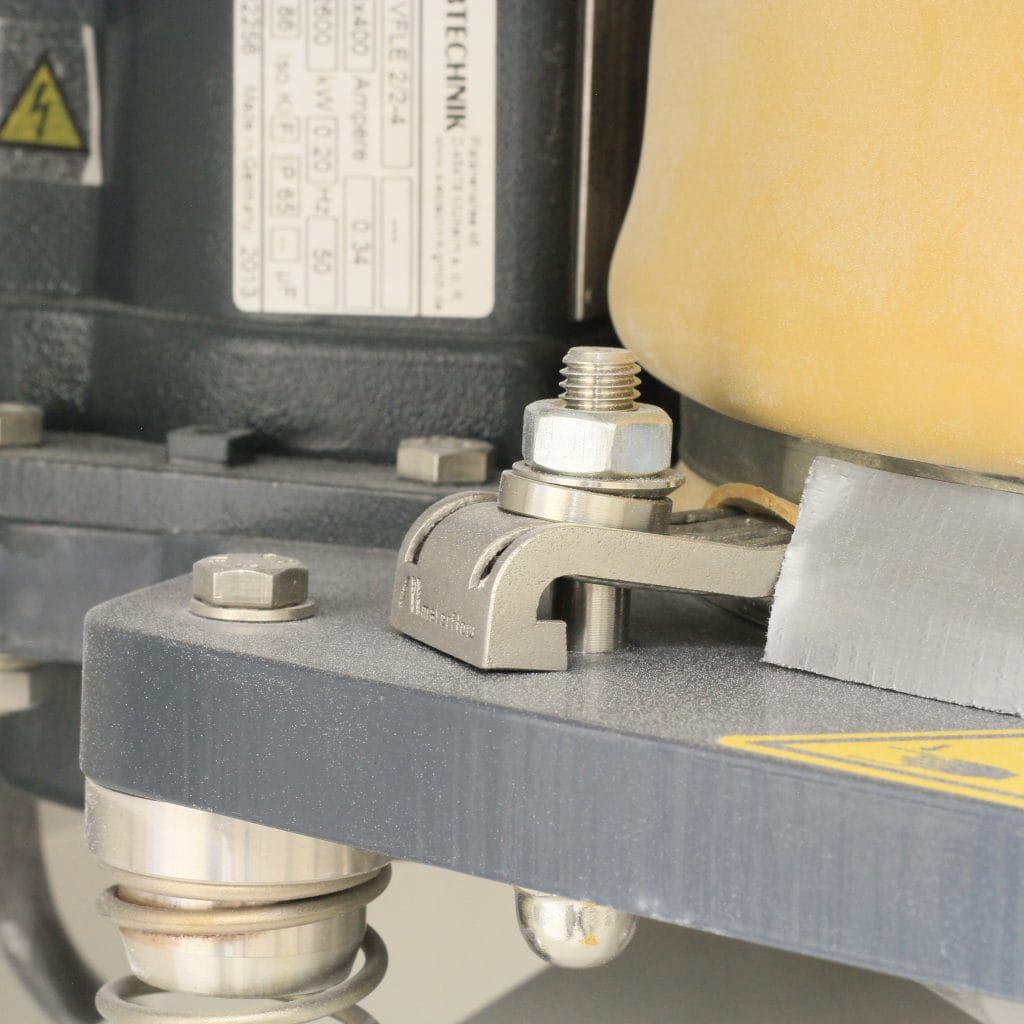
Fuses metal powders—such as aluminum, stainless steel, or titanium—to produce fully dense metal components that match the strength of traditionally milled parts.
By moving beyond basic hobbyist-grade prints, industrial manufacturers ensure that the data gathered during the prototyping phase is statistically significant. This reliability prevents costly redesigns late in the product lifecycle, as the material properties of the prototype closely mirror those of the final industrial component.
Strategic Advantage of Rapid Prototyping Services in Industrial Hubs
Global supply chain volatility has heightened the importance of local, high-precision manufacturing. For organizations seeking rapid prototyping services UK and European markets provide, the proximity of engineering expertise is a critical factor in iteration speed. When designers and manufacturing partners operate in synchronized time zones, the feedback loop for Design for Additive Manufacturing (DfAM) is drastically shortened.
Reduced Lead Times
Eliminate international shipping delays and customs bottlenecks to receive test-ready parts in days rather than weeks.
Regulatory Compliance
Ensure that materials and processes meet local safety and environmental standards, such as ISO certifications and REACH compliance.
Engineering Consultation
Direct access to technical experts who can optimize part geometry for weight reduction and consolidated assembly.
The integration of high-end 3D scanning and reverse engineering within these services further enhances the R&D process. By capturing the precise dimensions of existing machinery, engineers can develop custom replacement parts or integrated upgrades with sub-millimeter accuracy, ensuring a perfect fit upon the first installation.
Bridging the Gap: From Single Prototype to Serial Production
One of the primary challenges in traditional R&D is the “technology jump”—the point where a design must be completely overhauled because the prototyping method (such as CNC milling or manual fabrication) does not translate to the final production method (like injection molding). Industrial additive manufacturing eliminates this friction. When you develop a component using industrial 3D printing prototypes, the geometry, material behavior, and tolerances remain consistent as you scale toward serial production.
The Digital Inventory Advantage
By validating designs through additive methods, companies can move toward a digital inventory model. Instead of storing thousands of physical spare parts in a warehouse, you maintain a library of CAD files. When a part is required, it is printed on-demand. This approach reduces overhead costs and ensures that obsolete machinery can be supported indefinitely without the need for expensive, legacy tooling.
For engineering teams evaluating rapid prototyping services UK and European providers offer, the ability to transition seamlessly into small and medium series is a decisive factor. Using the same SLS or SLM machines for both the initial R&D and the final end-use parts ensures that the mechanical performance remains predictable. This “same-process” validation is the most effective way to eliminate hidden risks in the production chain.
Material Integrity and Industrial Post-Processing
A functional prototype is only as good as its finish. In 2026, the standard for a “finished” part has risen. It is no longer enough for a part to be the right shape; it must also meet specific surface roughness requirements, UV stability, or chemical resistance. Modern 3D printing services now include a suite of post-processing techniques that transform a raw build into a professional-grade component.
These finishing steps ensure that the prototype can be placed directly into field testing or even used as a bridge-to-production part while long-lead-time tools are being manufactured. The result is a more resilient R&D cycle where the hardware is as polished as the software driving it.
Future-Proofing Your Manufacturing Strategy
The integration of rapid prototyping into the broader industrial workflow is no longer an experiment—it is a competitive necessity. By reducing the time between a design iteration and a physical test, companies can explore more creative solutions, optimize for weight and sustainability, and respond faster to market shifts. As additive technologies continue to evolve, the distinction between a prototype and a final part will continue to fade, leading to a more efficient, on-demand industrial future.
Optimise Your Production with Materflow
Ready to transition from design to industrial-grade serial production? Our experts specialise in high-performance SLS and SLM solutions that meet the most rigorous engineering standards.
Request a Technical Consultation