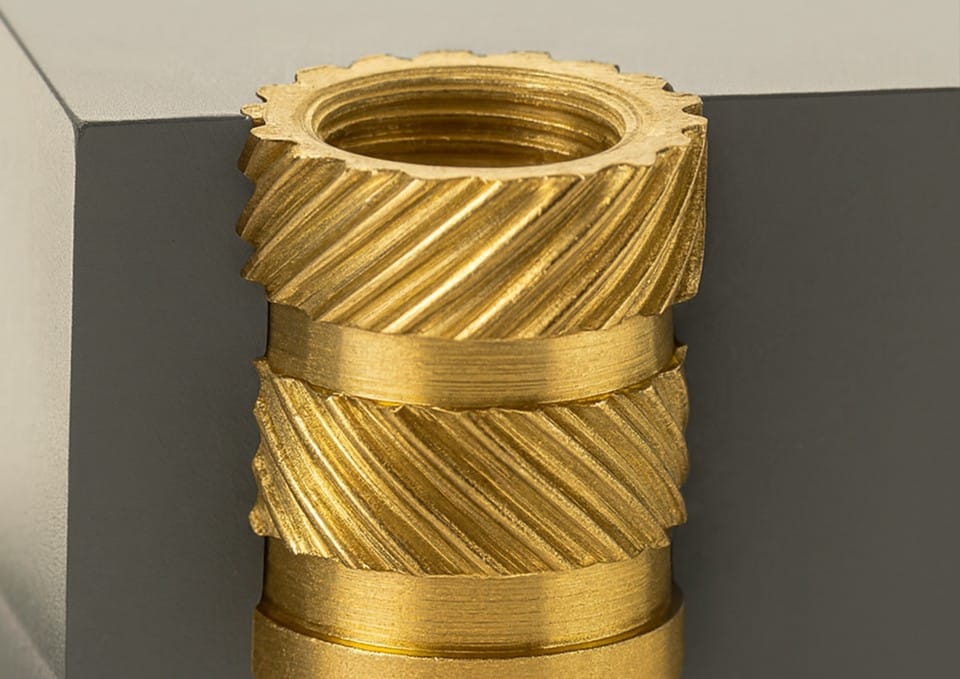





Design Guidelines for Inserts
Reinforcing threads in plastic parts is the most common reason to use metal threaded inserts. Plastic threads alone do not provide the same mechanical strength or wear resistance as metal.
Especially in small-thread screws (M5 and smaller), an insert significantly improves the product’s durability and longevity.
Things to consider when designing for inserts: design guide for inserts
When designing a 3D-printed part that includes threaded inserts, the most important thing is to leave enough space for the insert.
Required diameters and depths
| Thread (M) | Hole Ø (mm) | Depth (mm) |
| M3 | 3.9 | 5.8 |
| M4 | 5.6 | 6.4 |
| M5 | 6.4 | 9.6 |
| M6 | 8.0 | 12.8 |
| M8 | 9.6 | 12.8 |
Pay special attention to the following points:
- Hole diameter and depth: Select the correct pilot hole diameter and drilling depth based on the insert size (refer to the table below).
- Sufficient cavity depth: Make the hole deep enough for the insert to fit completely and bond securely. A shallow hole can weaken the connection.
- Material thickness: Ensure that the wall thickness around the insert is sufficient to maintain structural integrity.
- Installation method: Most inserts are installed using heat embedding, so the part’s geometry must allow for a straight and controlled insertion process.
By following these guidelines, you’ll ensure that the insert is firmly fixed and the final part remains durable in use.
Metal thread insert improves the durability of the plastic part
Kierteen vahvistaminen muovisissa osissa on yleisin syy käyttää metallisia kierreinserttejä. Muovimateriaalit eivät yksinään tarjoa samaa mekaanista lujuutta tai kulutuskestävyyttä kuin metalli.
Especially for small-thread screws (M5 and smaller), the insert significantly improves the durability and longevity of the product.
With a metal insert you get:
- More accurate and repeatable thread, compared to printed plastic thread
- Strength and wear resistance when the screw is tightened or loosened multiple times
- Easy and inexpensive installation – the insert is pressed into place using heat sinking
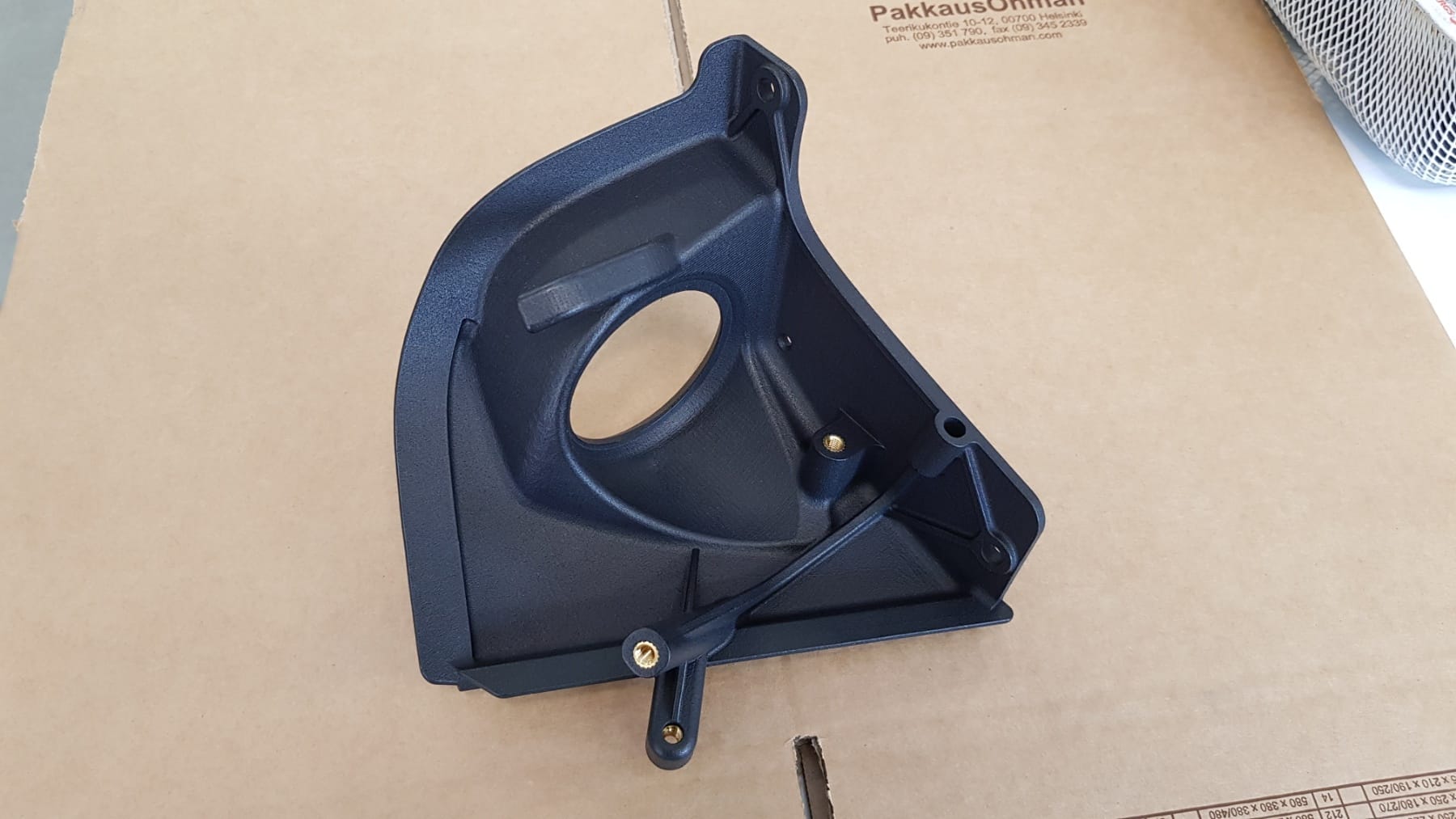
Most often, inserts are made of brass, which conducts heat well and adheres tightly to plastic.
During installation, the insert is attached to a soldering iron; the heat from the iron melts the surface of the plastic, causing the insert to sink into the material and lock in place permanently. The hole is intentionally made slightly narrower than the insert, so that the end result is tight and mechanically strong.
The same method is also widely used in injection molds and other industrial plastic components where a durable and reliable thread is required. Materflow recommends using metal inserts whenever the thread is M5 or smaller. This ensures that the part will be durable and safe to use.
Other 3D printing design guidelines:
- Design guidelines for Selective Laser Sintering (SLS)
- Design guidelines for metal printing
- 4 Stages of Post-Processing Metal 3D-Printed Parts